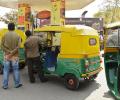
The government has slashed by up to a fifth the supplies of cheaper gas to city gas entities that retail CNG to automobiles, increasing their dependence in costly imported fuel. Buying costly imported gas to make up for the shortfall should result in a hike in CNG price but given the ensuing assembly elections in Maharashtra, that may be put off for now. Indraprastha Gas Ltd and Mahanagar Gas Ltd in regulatory filings stated that supplies of domestically produced gas, which was available at a capped rate which is half of the imported price, has been cut.
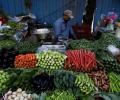
Retail inflation softened to 6.71 per cent in July due to moderation in food prices but remained above the Reserve Bank's comfort level of 6 per cent for the seventh consecutive month. With retail inflation continuing to remain high despite a fall in prices of vegetables and edible oils, among other commodities in July, the Reserve Bank of India (RBI) might go for another rate hike in September. The Consumer Price Index (CPI) based retail inflation was at 7.01 per cent in June and 5.59 per cent in July 2021. It was above 7 per cent from April to June this fiscal.

The wholesale price-based inflation declined to a 19-month low of 8.39 per cent in October, on easing prices of fuel and manufactured items. This is the first time in 19 months that WPI inflation print has come in single digit. Last was in March 2021 at 7.89 per cent. Since April 2021, WPI inflation remained in double digits for 18 months with September print at 10.79 per cent.


The government has to take a call on reducing or retaining the excise rate.
The wholesale price-based inflation eased for the third consecutive month in August to 12.41 per cent, on softening in prices of manufactured items, even as food items saw an uptick. The Wholesale Price Index-based inflation was 13.93 per cent in July and 11.64 per cent in August last year. August is the 17th consecutive month of double-digit wholesale price inflation (WPI).
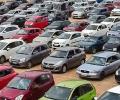
Passenger and commercial vehicle prices are expected to rise as automobile companies invest in upgrading vehicles to meet stricter emission norms that kick in from April next year. The Indian automobile industry is currently working to make their products meet the second phase of Bharat Stage VI, equivalent to Euro-VI emission norms, in real time driving conditions. Four-wheeler passenger and commercial vehicles will need more sophisticated equipment to be added to meet the next level of emission standards.
The wholesale price-based inflation eased to 15.18 per cent in June on lower prices of manufactured and fuel items, even though food articles remained costly. The Wholesale Price Index-based inflation was at a record high of 15.88 per cent last month and 12.07 per cent in June last year. The WPI inflation in June has bucked the three-month rising trend but remained in double-digit for the 15th consecutive month beginning April last year.

The BJP-led government had raised excise duty nine times between November 2014 and January 2016 to shore up finances as global oil prices fell, but then cut the tax just once in October last year by Rs 2 a litre.

A decision on raising diesel prices by Rs 3-5 per litre, kerosene by Rs 2 and LPG by up to Rs 50 per cylinder will be taken after UPA Chairperson Sonia Gandhi returns from US, top government officials said.
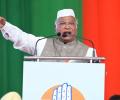
Congress president Mallikarjun Kharge has accused the BJP of rigging the Maharashtra assembly elections and called for a return to ballot paper voting. He also criticized the Modi government for selling off public assets, undermining democratic institutions, and promoting communal polarization. Kharge's remarks come as the Congress prepares for its AICC session in Ahmedabad, where it will present its political and economic views.

Government's fuel subsidy estimate was based on crude oil at $70.
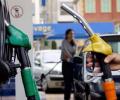
Petrol and diesel prices were on Thursday hiked by 80 paise a litre each, taking the total increase in rates in the last 10 days to Rs 6.40 per litre. Petrol in Delhi will now cost Rs 101.81 per litre as against Rs 101.01 previously while diesel rates have gone up from Rs 92.27 per litre to Rs 93.07, according to a price notification of state fuel retailers.

Maruti Suzuki fears a drop in demand for the auto sector in FY 12
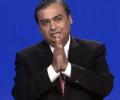
Reliance Industries Ltd on Thursday reported a 7.4 per cent rise in its December quarter net profit, as its retail business rebounded and telecom earnings rose. Its consolidated net profit of Rs 18,540 crore, or Rs 13.70 per share, in October-December - the third quarter of April 2024 to March 2025 fiscal (FY25) - compared to Rs 17,265 crore, or Rs 12.76 a share, in the same period a year back, according to a stock exchange filing by the company.

The government has raised the windfall profit tax levied on domestically produced crude oil as well as on the export of diesel and ATF, in line with firming international oil prices, according to an official order. The levy on crude oil produced by companies such as Oil and Natural Gas Corporation (ONGC) has been increased to Rs 2,100 per tonne from Rs 1,700 per tonne, the order dated January 2, said. Crude oil pumped out of the ground and from below the seabed is refined and converted into fuel like petrol, diesel and aviation turbine fuel (ATF).

Wholesale Price Index-based inflation declined to 6.62 per cent in January, however, retail inflation remained in double digits at 10.79 per cent during the month.
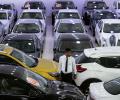
Traversing from being just vehicle manufacturers to mobility solutions providers amid a raging debate over which eco-friendly technology must be incentivised, the Indian automobile industry is driving in the new year under the shadow of a slowdown in sales with the post-pandemic pent-up demand in distant memory. The shift in the auto industry -- where advanced technologies like autonomous driving, vehicle intelligence, connected features and electrification are quickly gaining traction -- will be reflected in the upcoming Bharat Mobility Global Expo in which India's flagship Auto Expo has been clubbed to be held from January 17-22, 2025 in Delhi-NCR.
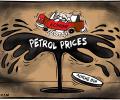
Petrol and diesel prices were raised for the second day in a row on Wednesday as state-owned fuel retailers resumed daily rate revision after a more than two-week long hiatus during assembly elections in states like West Bengal. Petrol price was increase ford by 19 paise per litre and diesel by 21 paise a litre, according to a price notification of state-owned fuel retailers. Petrol in the national capital now costs Rs 90.74 a litre and diesel comes for Rs 81.12 per litre.
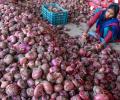
The Reserve Bank of India on Thursday raised its inflation projection to 5.1-4.7 per cent for the second half of the current fiscal on the back of spike in prices of vegetables such as onion and tomatoes.
Affected firms note practical problems in getting discoms, consumers to pay for costlier supply; viability shadow on investments

The decision to deregulate the diesel prices is expected to bring the oil subsidy down Rs 15,000 crore (Rs 150 billion), the agency said, adding the ongoing correction in global crude prices will also result in sizable gains for the government.
Though June-quarter performance was impressive, fuel price hikes and falling demand pose fresh challenges for the company.
Hit by soaring fuel prices, the aviation industry is mulling introduction of a "differential fuel surcharge" based on VAT rates in each state to partially offset losses suffered by the air carriers. "Airlines would not be able to survive if the cost of aviation turbine fuel (ATF) is so high and competition brings down the fares," V Thulasidas, chairman and managing director, Air India said.

Home Minister Rajnath Singh said that the decision could cost the government roughly Rs 15,000 crore.

Narendra Modi's landslide victory gives him the mandate to deregulate diesel prices as well as raise natural gas rates with a clear road map towards free pricing to cut subsidies and shrink the budget deficit.
Travel by Air India would cost Rs 300-550 more from June 3 following a hike in fuel surcharge in the wake of oil companies raising Air Turbine Fuel (ATF) prices by 18.5 per cent.
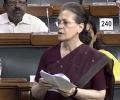
Gandhi was unusually more proactive and practically led the Opposition protest against the rise in the prices of petrol, diesel and LPG cylinders during the Question Hour.

Maruti has improved its sales in the recent past.
Unlike some US airlines, Indian carriers are not planning to charge services like baggage handling to beef up their bottomlines, which is hit by a steep hike in fuel prices, but would prefer to keep the options open.The issue came to the fore following a decision by American Airline to impose a $25-15 charge for baggage handling, as the US carriers buckled under steep hike in fuel prices.
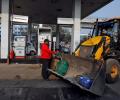
Petrol price on Friday inched closer to the Rs 100-a-litre mark in Mumbai while diesel crossed the Rs 91 mark after oil companies raised rates again. Petrol price was increased by 19 paise per litre and diesel by 29 paise a litre, according to a price notification by state-owned fuel retailers. The hike -- 11th this month -- pushed petrol and diesel prices to all-time high levels across the country. In Delhi, petrol rates climbed to Rs 93.04 a litre and diesel rose to Rs 83.80.
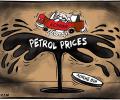
The logic of deregulation was that the consumer was protected no matter what the price of crude. But now the reverse has happened. The government is protected no matter what the price of crude, observes Aakar Patel.

Jet Airways on Friday said it will raise fares by 10-15 per cent as early as this month to offset rising jet fuel prices -- a decision that possibly stems from confidence about returning passenger demand.

Issues like high insurance cost and the announced price hike effective January could also weigh on sales in 2019. The only bright spot is the softening seen in fuel prices over the past month.
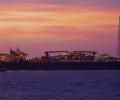
About two dozen discoveries of the state-owned ONGC, Reliance Industries and the Gujarat State Petroleum Corp (GSPC) in KG Basin alone are languishing for want of right price.
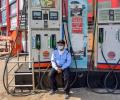
Petrol price on Tuesday breached the Rs 85 a litre mark in the national capital and diesel neared record high after rates were raised for the second consecutive day. Petrol and diesel prices were hiked by 25 paise per litre each, according to a price notification from oil marketing companies. This took the petrol price in Delhi to Rs 85.20 per litre and to Rs 91.80 in Mumbai. Diesel rate climbed to Rs 75.38 a litre in the national capital - just shying away from its record high - and to an all-time high of Rs 82.13 in Mumbai, the price data showed.
Finance Minister Nirmala Sitharaman on Monday ruled out a cut in excise duty on petrol and diesel to ease prices, which have touched an all-time high, saying payments in lieu of past subsidised fuel pose limitations. Petrol and diesel as well as cooking gas and kerosene were sold at subsidised rates during the previous Congress-led UPA government. Instead of paying for the subsidy to bring parity between the artificially suppressed retail selling price and the cost that had soared because of international rates crossing $100 per barrel, the then government issued oil bonds totalling Rs 1.34 lakh crore to the state-fuel retailers. These oil bonds and the interest thereon are being paid now.
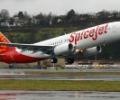
Low-cost carrier SpiceJet would adopt a two-pronged strategy - increase airfare and improve efficiency - for better margins, said Neil Mills, chief executive office of Spicejet Limited.

Rising fuel prices, intense competition and inability to pass on spiralling expenses have been negatively impacting the domestic airlines.

CNG prices in Mumbai may have to be hiked by about Rs 16 per kg and piped cooking gas by Rs 10 after government decided to divert some of its cheaper domestic gas to Gujarat.
